
How Head to Head works
We take the top-ranked product from each category and test them against each other. Rather than listing specs, we give you a real verdict on which one is the better choice for your specific situation — and exactly when to buy each one.
Front-Clip vs Back-Clip Dog Harness: Which Is Right for Your Dog?
](/_next/image?url=https%3A%2F%2Fm.media-amazon.com%2Fimages%2FI%2F41ji4lsxEIL._SL160_.jpg&w=3840&q=75)
PHOEPET No Pull Dog Harness Medium Reflective Front Clip Vest with Handle,Adjustable 2 Metal Rings 3 Buckles,[Easy to Put on & Take Off](M, Orange)
Redirects pullers without a collar — the training harness

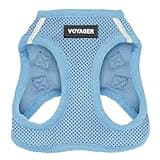
Best Pet Supplies Voyager Step-in Air Harness - All Weather Mesh, Reflective, No Pull Harness for Dogs, Cats - Secure with Hook & Loop Fastener, Buckle, Double D-Rings - Baby Blue, M
Comfortable, natural movement for dogs that walk nicely
Our verdict — Front-Clip Harness wins
For most dogs that pull — which is most dogs — the front-clip harness is the right choice. When a dog lunges forward, the front attachment point redirects them sideways toward you rather than letting them use their chest to drag ahead. This does not fix pulling on its own, but it gives you real control during walks and makes training significantly easier. Back-clip harnesses are comfortable and well-suited to dogs that already walk calmly on a loose lead, but they give a determined puller a structural advantage they will absolutely use.
Buy Front-Clip Harness if…
Your dog pulls on the lead, lunges, or is still in lead training — which covers the majority of dogs.
Buy Back-Clip Harness if…
Your dog already walks calmly on a loose lead and you want a comfortable harness for daily walks or active exercise.
If your dog pulls, front-clip redirects them. If your dog already walks well, back-clip is more comfortable.
Pulling control
A front-clip harness has a D-ring at the dog's sternum. When the dog pulls forward, the lead creates lateral tension that turns the dog's body sideways. The dog cannot continue pulling in a straight line — it has to reorient. Over time, most dogs reduce the pulling behaviour because it produces this interruption. The physics of the attachment does the work; you do not need to yank or correct.
A back-clip harness attaches between the shoulder blades. When the dog pulls, the lead creates rearward pressure along the same axis the dog is already pulling along. There is no redirection. Sled dog harnesses use exactly this design because it maximises forward pulling force. Buying a back-clip harness for a dog that pulls is, biomechanically, buying a sled harness.
Comfort and fit
Back-clip harnesses are more forgiving to fit and more comfortable for the dog during long walks. Because the lead attachment is on the back, there is no strap across the chest that could cause rubbing or shoulder restriction. For a dog that already walks well, the back-clip provides a natural range of motion that most dogs prefer.
Front-clip harnesses require more precise fitting. The sternum strap must sit flat on the chest — not twisted or riding up toward the throat. A poorly fitted front-clip can restrict shoulder movement and affect gait over time. Check fit carefully, adjust regularly on growing dogs, and watch for any asymmetry in how your dog moves. This is a legitimate concern, not a reason to avoid front-clip — just a reason to fit it properly.
Running and active exercise
The back-clip harness allows full shoulder extension at running pace, which makes it the better choice for canicross, jogging, agility training, and any activity where the dog needs free movement. The lead attachment sits out of the way and does not interfere with the natural stride.
Front-clip harnesses can restrict shoulder rotation at speed. For high-intensity exercise or running alongside your owner, the sternum strap limits how far the dog's front legs can reach on each stride. Use the front-clip for training walks and daily lead work, then switch to a back-clip or dedicated sport harness for exercise sessions where you want the dog moving freely.
Which to buy first
If you are buying a harness for a dog that pulls — which covers the majority of dogs — buy the front-clip. You can always move to a back-clip once lead manners are established. Going the other direction (starting back-clip and switching when pulling becomes a problem) just means buying two harnesses.
If you are buying for a puppy, start with a front-clip. Puppies learn quickly that pulling is unproductive when the attachment creates lateral redirection. Establishing this habit early makes every subsequent walk easier. Some harnesses offer dual attachment points — both front and back — which is a sensible option if you want flexibility across different situations.
Ready to buy? Check current prices below
Redirects pullers without a collar — the training harness
Comfortable, natural movement for dogs that walk nicely
Frequently Asked Questions
Can a front-clip harness hurt a dog's shoulders?▾
A correctly fitted front-clip harness should not restrict shoulder movement. The chest strap should sit below the point of the shoulder, not across it. If it rides up or the fit is too tight, it can cause rubbing and potentially affect gait over time. Check fit regularly, especially on growing dogs.
Will a front-clip harness stop my dog pulling completely?▾
No harness stops pulling on its own. The front-clip reduces the effectiveness of pulling and makes control easier, but consistent lead training is still required. Think of it as a tool that creates better conditions for training, not a substitute for it.
My dog hates putting on a harness — does the clip position make a difference?▾
Some dogs dislike the process of putting on any harness. Look for a slip-on or overhead design where the dog puts their head through first rather than stepping into leg holes. Most dogs adapt quickly once the harness is on; the resistance is usually about the fitting process, not the harness itself.
Can I use a front-clip harness for running with my dog?▾
Not ideally. The sternum strap can restrict natural shoulder extension at running pace. For canicross or jogging, a back-clip harness or a dedicated running harness is more appropriate. Use the front-clip for training walks, and switch to back-clip for exercise sessions.
My dog has a deep chest and narrow neck — will a standard harness fit?▾
Deep-chested breeds like Greyhounds and Whippets are difficult to fit with standard harnesses. Look for harnesses specifically for sighthounds or deep-chested dogs, which have a different neck-to-chest ratio. Both clip types are available in these specialist fits.
See the full ranking
←10 Best Dog Harnesses for Medium Dogs of 2026