
How Head to Head works
We take the top-ranked product from each category and test them against each other. Rather than listing specs, we give you a real verdict on which one is the better choice for your specific situation — and exactly when to buy each one.
UV Baby Bottle Sterilizer vs Steam Sterilizer — Which Is Safer and Better in 2026?
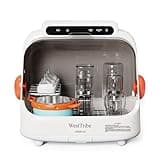
Baby Bottle Sterilizer and Dryer – UV Sterilizer 20L Large Capacity, Hot Air Drying, UV Sanitizer Box, No Need to Clean Regularly.UV Light Sanitizer Box .Sanitizer Machine.
No heat, no moisture — sterilises with ultraviolet light

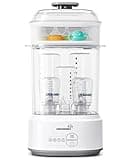
GROWNSY Bottle Sterilizer and Dryer, Compact Electric Steam Baby Bottle Sterilizer (Esterilizador de Biberones), Bottle Sanitizer for Baby Bottles, Pacifiers, Pump Parts
Fast, proven, and compatible with almost everything
Our verdict — Steam Sterilizer wins
For daily baby bottle sterilisation, the steam sterilizer wins. Steam technology has decades of clinical validation, kills 99.9% of bacteria and viruses in 6–8 minutes, and works reliably with every bottle type on the market. UV sterilizers are genuinely useful for specific situations — heat-sensitive items, quick top-up sterilisation, and travel — but they are not a like-for-like replacement for steam when you are sterilising multiple bottles multiple times per day.
Buy UV Sterilizer if…
You have heat-sensitive items that cannot be steam-sterilised, you travel frequently and need a portable option, or you need to do quick top-up sterilisation between feeds without running a full steam cycle.
Buy Steam Sterilizer if…
You are setting up for daily bottle feeding from birth, you want the most clinically validated sterilisation technology, or you need to process multiple bottles at once quickly and reliably.
If you are trying to choose between a UV baby bottle sterilizer and a steam sterilizer, you are looking at two products that sound interchangeable but perform quite differently in daily use.
UV sterilizers feel more modern — no water, no heat, no waiting for things to dry. Steam sterilizers feel more familiar, and for good reason: hospitals have used steam sterilisation for over a century.
Both kill bacteria. But the question of which is better for sterilising baby bottles every day is not as straightforward as the marketing makes it sound.
This comparison covers real-world performance, long-term reliability, cost, and exactly which type of parent each option is actually built for.
Compare prices on Amazon
No heat, no moisture — sterilises with ultraviolet light
Fast, proven, and compatible with almost everything
Performance in real use
Steam sterilizers work by generating pressurised steam at over 100°C, which denatures the proteins in bacterial cell walls and kills viruses including norovirus, rotavirus, and RSV. Independent testing consistently shows kill rates above 99.9% for a full steam cycle — typically 6–10 minutes depending on the unit.
UV sterilizers use ultraviolet-C light at 254nm, which damages bacterial and viral DNA, preventing replication. Kill rates at this wavelength are genuinely effective — UV-C is used in hospital air handling systems and water purification — but effectiveness on bottles depends critically on direct line-of-sight exposure. Any surface not directly exposed to the UV beam is not sterilised. Inside a bottle, nipple holes, the internal threads of a cap, or any shadow created by the bottle shape can create gaps.
Steam has no shadow problem. It fills the entire chamber and reaches every surface. For baby bottles specifically — which have narrow necks, complex valve systems, and multiple small parts — this matters more than most UV product literature acknowledges.
Build quality and durability
Steam sterilizers are mechanically simple: a water reservoir, a heating element, and a chamber. The failure points are mineral scale build-up in the reservoir (solved by regular descaling with white vinegar or citric acid) and eventual heating element fatigue. A quality steam sterilizer bought at a reasonable price point will reliably last 2–3 years of daily use.
UV sterilizers have a more complex failure profile. The UV-C lamp itself has a rated lifespan — typically 5,000 to 8,000 hours — after which the wavelength output degrades and kill rates drop without any visible indication to the user. Most consumer UV sterilizers do not have a lamp-replacement indicator, which means you may be using a unit that is no longer performing as advertised without knowing it.
This is not a reason to avoid UV sterilizers entirely, but it is a reason to track usage hours and replace lamps on schedule, or to choose a unit that monitors lamp health. At the budget end of the market, very few do.
Value for money
A quality electric steam sterilizer sits between £30 and £60 and holds 6–8 bottles per cycle. At that price you are getting a unit that will handle the entire newborn period without issue. Running costs are minimal — just water and electricity, plus occasional descaling solution.
UV sterilizers occupy a wider price range. Basic units that sterilise individual items start below £30, but units large enough to handle 4+ bottles simultaneously tend to sit between £60 and £120. The replacement lamp cost adds to the long-term running expense, and these are not always easy to source for every brand.
For a family doing 4–6 bottle sterilisations per day across the first 6–12 months, a steam sterilizer at the right price point represents better value. The UV sterilizer earns its higher cost if you specifically need what UV does differently — and there are genuine situations where that's the case.
Who should buy which
Buy a steam sterilizer if you are a new parent setting up for daily bottle feeding. It is faster, covers every surface regardless of shape, has been validated against the specific pathogens that affect newborns, and costs less. There is no meaningful situation in which a steam sterilizer fails a healthy bottle-fed baby.
Buy a UV sterilizer if you have heat-sensitive items that cannot go through steam — some silicone soothers warp under repeated steam cycles, some breast pump components are not rated for steam, and some wooden or electronic accessories obviously cannot be steamed. UV is also the better option for travel: compact UV units that fit in a bag let you quickly sterilise a dummy or bottle on the go without access to an electric steam unit.
A common sensible solution for families who can manage the budget: a steam sterilizer as the primary unit at home, and a compact UV sterilizer or UV sterilising bag for travel and top-up use. They are not competing products in that scenario — they are complementary.
Ready to buy? Check current prices below
No heat, no moisture — sterilises with ultraviolet light
Fast, proven, and compatible with almost everything
Frequently Asked Questions
Is UV sterilisation as effective as steam for baby bottles?▾
UV-C sterilisation is effective, but with an important caveat: it requires direct line-of-sight to every surface being sterilised. Steam fills an entire chamber and reaches every surface regardless of shape. For bottles with narrow necks, valves, or complex shapes, steam provides more reliable full coverage. UV is excellent for flat items, dummies, and accessories where every surface is exposed to the light.
How long does a UV sterilizer lamp last?▾
Most UV-C lamps used in baby sterilizers are rated for 5,000 to 8,000 hours of use. At 30 minutes of use per day, that is roughly 27–44 years — but most units run cycles of 5–10 minutes, so actual lamp life in daily use is typically 2–4 years before output begins to degrade. The issue is that most units give no warning when output drops below effective levels. Check your unit's documentation for lamp replacement intervals.
Can you use a steam sterilizer for silicone soothers?▾
Yes, but repeatedly steaming silicone can cause some materials to degrade or become tacky over time, especially lower-quality silicone. Check the manufacturer's guidelines for each soother. UV sterilisation is gentler on silicone and a better long-term option for items you want to preserve for extended use.
Do you need to dry bottles after steam sterilisation?▾
The steam cycle itself leaves moisture inside the sterilizer chamber, which can allow recontamination if bottles are left open and not used promptly. Most manufacturers recommend leaving the lid closed until you need the bottle, as the steam environment inside is technically sterile. If you need bottles pre-dried for formula preparation, look for a combined sterilizer and dryer unit, or leave lids off in the sterilizer to air dry before storing.
Is steam sterilisation necessary past a certain age?▾
Most health guidelines recommend sterilising bottles until a baby is at least 12 months old. After that age, the immune system is developed enough that normal dishwasher cleaning is sufficient. Some parents continue longer — there is no harm in it — but the intensive sterilisation regimen is primarily important in the first year.
See the full ranking
←10 Best Baby Bottle Sterilizers of 2026