How Head to Head works
We compare two products or product types head to head, giving you a real verdict on which is the better choice for your situation — and exactly when to choose each one.
Stand Mixer vs Hand Mixer: Which Fits How You Actually Bake?
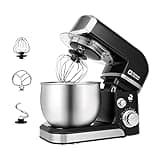
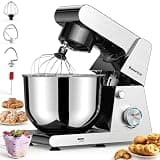
Kitchen in the box Stand Mixer,3.2Qt Small Electric Food Mixer,6 Speeds Portable Lightweight Kitchen Mixer for Daily Use with Egg Whisk,Dough Hook,Flat Beater (Black)
Hands-free power for regular or serious baking

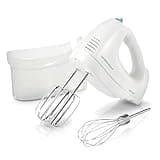
Hamilton Beach 6-Speed Electric Hand Mixer With QuickBurst and Bowl Rest
Cheap, compact, and enough for occasional baking
Our verdict — Stand Mixer wins
For anyone who bakes regularly — weekly cookies, bread, cakes from scratch — a stand mixer is the better long-term investment, handling heavy dough hands-free with far more power and consistency than a hand mixer can manage. A hand mixer is still the right call for occasional bakers, smaller kitchens, or anyone who mainly whips cream, beats eggs, or makes simple batters that don't demand serious mixing power. Frequency and the type of baking you actually do should decide this one, not just price.
Buy Stand Mixer if…
You bake bread, stiff cookie dough, or large batches regularly and want hands-free mixing power that won't strain under heavy use.
Buy Hand Mixer if…
You bake occasionally, mostly make lighter batters and whipped cream, and want something cheap that stores away easily.
Burning out a hand mixer's motor halfway through a batch of stiff cookie dough is one of the most common frustrations serious home bakers eventually run into, and it's usually the moment people start shopping for a stand mixer instead. A stand mixer vs hand mixer comparison isn't really about which is "better" in the abstract — it's about matching the tool to how often and how seriously you actually bake.
A stand mixer is a countertop appliance with a fixed motor base and a bowl that locks into place, mixing hands-free via interchangeable attachments. A hand mixer is a lightweight, handheld device you hold and move manually through a bowl, offering far less power but a fraction of the price and storage footprint.
This article covers where each one genuinely performs better, what a hand mixer struggles with that a stand mixer handles easily, and which one makes sense for your kitchen and baking habits in 2026.
What is a Stand Mixer?
A stand mixer is a heavy, motor-driven appliance that sits on the counter, with a bowl that locks beneath a mixing head. The motor drives interchangeable attachments — a flat beater, whisk, and dough hook — through a planetary mixing action that reaches every part of the bowl without you holding anything.
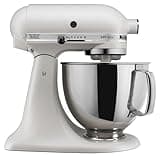
Key specs are bowl capacity (4.5–5qt suits most home bakers, 6qt+ for larger batches or bread), motor wattage (300W+ handles stiff dough comfortably), and whether it's tilt-head or bowl-lift design, which affects how easily you can add ingredients mid-mix and how much counter clearance it needs.
A stand mixer is the right choice for anyone baking bread, stiff cookie dough, or larger batches on a regular basis, and for anyone who wants truly hands-free mixing to multitask on other steps of a recipe while it runs.
What is an Hand Mixer?
A hand mixer is a lightweight, handheld device with two removable beaters (or a whisk attachment) driven by a compact motor in the handle. You hold it directly in the bowl and move it around manually, controlling speed and coverage yourself rather than relying on a fixed mixing pattern.
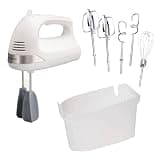
Key specs are motor wattage (150W+ is reasonably capable for most everyday tasks), number of speed settings, and whether beaters and whisks are dishwasher-safe, which matters more day-to-day than most buyers initially expect.
A hand mixer is the right choice for occasional bakers, anyone with limited storage or counter space, and tasks like whipping cream, beating eggs, or mixing simple cake and pancake batters that don't demand serious mixing power or long run times.
Key Differences
Pros & Cons
Stand Mixer
- ✓Handles stiff bread and cookie dough without straining or risking motor burnout
- ✓Runs hands-free, freeing you up to prep other ingredients while it mixes
- ✓A wide attachment ecosystem — pasta rollers, meat grinders, sausage stuffers — extends its use well beyond baking
- ✗Takes up significant, usually permanent, counter space that a hand mixer doesn't require
- ✗Meaningfully more expensive, which is hard to justify for occasional or light baking
Hand Mixer
- ✓Costs a fraction of a stand mixer while still handling everyday baking tasks well
- ✓Stores easily in a drawer or cabinet rather than needing dedicated counter space
- ✓Quick to grab for small jobs like whipping cream or beating a couple of eggs
- ✗Struggles with stiff dough and can risk motor burnout if pushed beyond its capability
- ✗Requires holding and manually moving it through the bowl for the full mixing time
Handling heavy or thick mixtures
A stand mixer's planetary motion and dedicated dough hook are built specifically for dense, resistant mixtures — bread dough, thick cookie dough, heavy cake batters — without straining the motor or requiring you to fight the mixture by hand. The mixing head simply keeps working at a steady pace regardless of how much resistance the dough offers.
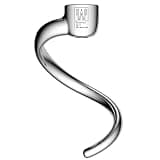
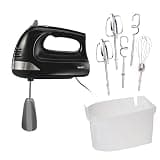
A hand mixer's smaller motor is genuinely not built for the same job. Pushing a hand mixer into stiff bread dough or a dense cookie dough is one of the most common ways these devices burn out prematurely, and even mixers marketed as "heavy duty" struggle noticeably compared to a stand mixer's dedicated dough hook.
If bread, stiff cookie dough, or dense batters are a regular part of your baking, a stand mixer isn't a luxury — it's the tool that actually does that job without risking damage to the appliance or an unevenly mixed result.
Hands-free convenience for multi-step recipes
A stand mixer's biggest everyday convenience is that it runs unattended. Once ingredients are in the bowl and the mixer is set to the right speed, you're free to prep other components of a recipe, measure out the next addition, or start on a second dish entirely, all while the mixer keeps working.
A hand mixer demands your full attention and one hand (often both) for the entire mixing duration. For quick jobs like whipping cream this is a non-issue, but for longer mixing times — creaming butter and sugar for several minutes, or a multi-stage cake batter — it becomes a genuinely limiting factor on what else you can accomplish in the kitchen simultaneously.
For anyone who bakes multi-step recipes regularly, the hands-free time a stand mixer frees up adds up meaningfully across a baking session, even setting aside the raw power difference between the two.
Storage and counter space
A hand mixer's small size is a genuine practical advantage for kitchens without much spare counter space. It stores flat in a drawer or a cabinet shelf and takes seconds to pull out and put away, leaving no permanent footprint when it's not in use.
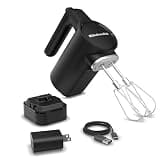
A stand mixer is heavy and bulky enough that most owners end up leaving it out permanently on the counter, since lifting it in and out of a cabinet regularly is impractical for most people. Compact stand mixer models exist for smaller kitchens, but they're still considerably larger than anything a hand mixer requires.
If counter space is genuinely limited, or you're in a small apartment kitchen without room to dedicate to a large appliance, a hand mixer's compact footprint is a real, not trivial, advantage worth weighing against the stand mixer's extra capability.
Price and value for occasional bakers
A hand mixer typically costs a fraction of even an entry-level stand mixer, and for someone who bakes occasionally — a few times a month rather than weekly — that lower price is easy to justify without feeling like a compromise, since it comfortably handles lighter tasks like cake batter and whipped cream.
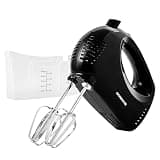
OVENTE 5-Speed Corded Electric Hand Mixer with Stainless Steel Whisks, Compact Portable Design with Snap-On Storage Case,150W Lightweight Handheld Mixer for Baking & Cooking, Black HM151B
See price →Kitchen in the box Stand Mixer,3.2Qt Small Electric Food Mixer,6 Speeds Portable Lightweight Kitchen Mixer for Daily Use with Egg Whisk,Dough Hook,Flat Beater (Black)
See price →A stand mixer's higher price makes far more sense the more frequently and seriously you bake. Someone making bread weekly, batch-baking cookies for gifts, or cooking multi-step recipes regularly gets real, compounding value from a stand mixer's power and hands-free convenience that a hand mixer simply can't match at any price point.
If you're unsure how often you'll actually bake, starting with a hand mixer is a low-risk way to find out before committing to a stand mixer's higher cost and larger commitment of space. If you already know baking is a regular hobby, the stand mixer pays for itself in capability fairly quickly.
Can You Use One Instead of the Other?
For light, occasional baking — cake batter, whipped cream, beaten eggs, simple cookie dough — a hand mixer handles the job well, and most occasional bakers won't feel limited using one instead of a stand mixer.
Where a hand mixer genuinely falls short is stiff bread dough, dense cookie dough, and any recipe requiring extended mixing times, where the smaller motor risks burning out and the manual effort becomes tiring. If bread or serious cookie baking is a regular part of your routine, there's no real workaround — a stand mixer's dough hook and motor power are built for exactly that job.
There's no meaningful combo option here the way there is with some kitchen tools — the honest answer is to match the appliance to your actual baking frequency and style. A hand mixer for occasional, lighter baking, or a stand mixer if you bake seriously and often, both make more sense than buying the wrong one and being disappointed by either capability or cost.
Related Tools Worth Knowing
- ›
Kitchen Utensil Set→ — A silicone spatula and wooden spoon round out any mixer setup for folding batter and scraping bowls clean.
- ›
Digital Kitchen Scale — For serious bread baking specifically, where precise flour and water ratios matter more than volume measurements.
- ›
Silicone Spatulas→ — Essential for scraping every bit of batter out of a mixing bowl, whichever mixer you use.
- ›
Proofing Basket — Pairs with a stand mixer's dough hook specifically for anyone baking artisan-style bread loaves regularly.
Our Top Picks
Best Stand Mixer
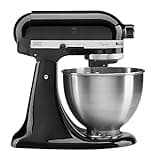
Ready to buy? Check current prices below
Hamilton Beach 6-Speed Electric Hand Mixer With QuickBurst and Bowl Rest
Cheap, compact, and enough for occasional baking
Frequently Asked Questions
Can a hand mixer handle bread dough?▾
Not reliably — bread dough is dense enough that it commonly strains or burns out a hand mixer's smaller motor, even on models marketed as heavy duty. A stand mixer with a dedicated dough hook is the appropriate tool for bread dough.
Is a stand mixer worth it if I only bake occasionally?▾
Probably not — the higher price and larger counter footprint are hard to justify for occasional, lighter baking like cakes or cookies. A hand mixer covers those tasks well at a fraction of the cost and storage commitment.
How much more powerful is a stand mixer than a hand mixer?▾
Stand mixer motors typically run 300–500+ watts compared to a hand mixer's 150–300 watts, and the planetary mixing action distributes that power more effectively through dense mixtures. The practical difference shows up most clearly with stiff dough rather than light batters, where both appliances perform similarly.
Do I need a stand mixer's attachments, or is the base machine enough?▾
The base machine with its included beater, whisk, and dough hook covers the vast majority of home baking needs. Additional attachments like pasta rollers or meat grinders are worth considering only if you specifically plan to use those functions regularly.
Which is better for whipping cream or egg whites, a stand mixer or hand mixer?▾
Both handle whipping cream and egg whites well, since neither task requires significant power. A hand mixer is often more convenient for these quick jobs since there's less setup involved than locking a bowl into a stand mixer.
Conclusion
For regular or serious bakers, a stand mixer is the better long-term choice — it handles heavy dough without strain, runs hands-free, and opens up a wider range of recipes over time.
For occasional bakers or anyone with limited counter and storage space, a hand mixer covers the essentials — cake batter, whipped cream, simple cookie dough — without the cost or footprint of a stand mixer. The honest framework is frequency and dough type: bake often or bake bread, get the stand mixer; bake occasionally and mostly lighter mixtures, a hand mixer is genuinely enough.
Check the top picks above for well-reviewed options at each price point, or consider starting with a hand mixer if you're not yet sure how often baking will become a regular habit.